

Vilnius, Lithuania
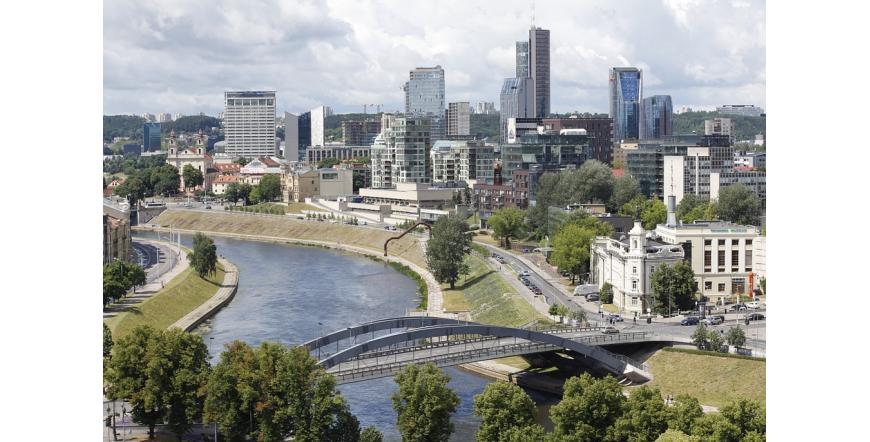
Vilnius is the capital of Lithuania, as well as the administrative center of Vilnius County and of Vilnius Regional Municipality without being part of it. The city itself is separated into an independent urban municipality and is located at the confluence of the Vilnia River with the Neris River. The city is one of the financial centers of the Baltic States.
Vilnius was mentioned for the first time in 1323 in the letters of the Grand Duke of Lithuania Gediminas to the German cities, with which he invited Germans and Jews to settle in his capital. Vilnius reached its peak in its development under Grand Duke Sigismund II Augustus, who moved his palace to the city in 1544. Decades of rapid growth followed, also aided by the founding in 1579 of Vilnius University under King Stefan Bathory, which became one of the most important cultural centers in the Polish-Lithuanian Commonwealth.
Vilnius is among the most beautiful cities in Europe, in which echoes of a mythical time, embracing Gothic, classicism, baroque and modernity are harmoniously combined. The main sights in the city are the baroque cathedral "Saints Peter and Paul", the square of the Town Hall "Saint Francis", the church "Saint Anne", the "Gates of the Dawn" - part of the former defensive fortifications, the Higher Castle, constructed in the 13th century, from where there are wonderful views of the city. Although it is known as a Baroque city, Vilnius also has preserved Gothic buildings. In 1994, it was included in the UNESCO World Heritage List.
Cathedral Square, which houses the Roman Catholic Cathedral with several chapels and bell towers, is the biggest landmark in Vilnius. Built on an ancient pagan altar from 1251, the cathedral was built in stages. Behind the Cathedral is the Royal Palace of Lithuania from the 15th century. The three-winged Gothic building was restored in 2009. At the eastern end of the square stands a monument to the city's founder, Grand Duke Gediminas. The hill on top of which Gediminas Castle is located, which marks the beginning of the city, is also named after him. The castle-fortress became a symbol of Vilnius, Lithuania and the nation.
Beautiful baroque palaces abound in Vilnius, which perfectly form the city's business card - the Presidential Palace from the 15th century, the Slujko Palace from the 16th century on the left bank of the Neris River, now the Academy of Music and Theater, the Radziwill Palace from the 16th century with elements of the Dutch Renaissance, currently the Museum of Fine Arts. One of the best architectural ensembles in the old town is Vilnius University, which is among the oldest in Europe. It is not by chance that he was chosen to represent Lithuania in the "Mini Europe" Park in Brussels.
Among the beautiful representatives of the Gothic style in Vilnius, one of the beautiful Gothic buildings from the 15th century, located on the city square, is the house-museum of the Lithuanian artist Kazhis Varnelis. It contains old books and maps of Eastern Europe, illustrations, drawings and sculptures. The true atmosphere of Lithuanian artists can definitely be felt in Užupis - the neighborhood of artists and romantics.
Vote:
Rating 5 from 1 voted
More sights in Lithuania

Weather in Vilnius, Lithuania

19.28 °C
Wind: 4.12 m/s
Humidity: 69 %
Pressure: 1014 hpa
Clouds: 0 %
Wind: 4.12 m/s
Humidity: 69 %
Pressure: 1014 hpa
Clouds: 0 %