

Jertpoint Abbey, Ireland
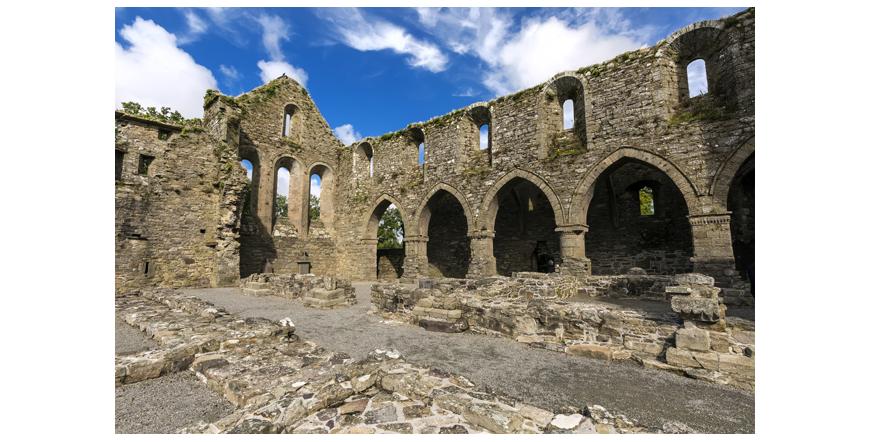
In the past, no large urban centers were formed in Ireland, the population was directed to monastic communities. For this reason, the Church played an important role in the history of the country, as well as of the Irish Church, from the early missionary days to the Middle Ages. From this period, today in Ireland, more precisely near Thomastown, the ruins of the Cistercian abbey, which once grew rich from sheep farming, have been preserved - the Jertpoint Abbey. The abbey is testimony to the fact that monasticism in Ireland was then at its height.
Jertpoint was founded as an abbey in the early 60s of the 12th century by the ruler of a medieval kingdom - Ossory. The first inhabitants were Benedictines, and later - in 1180, Jertpoint sheltered Cistercian monks. The order, which was founded in 1098, spread rapidly and in the 12th century already included 34 monasteries in Ireland.
The main source of income for Jertpoint Abbey was farming. It had fishponds, mills and livestock farms. With the income from the sale of wool, Jertpoint was able to decorate its buildings with wonderful sculptures and bas-reliefs, which are still its hallmark today.
Unfortunately, Henry VIII closed all the monasteries of this order and the monks were forced to disperse and seek shelter elsewhere. The ruler presented Jertpoint and its adjacent lands to the influential family of the Earls of Ormond. Over time the buildings of Jertpoint Abbey fell into disrepair and later came under the control of the Office of Public Works. Today they are accessible to visit so one can enjoy more than just romantic ruins.
Vote:
Rating 5 from 1 voted


