
Tallinn, Estonia
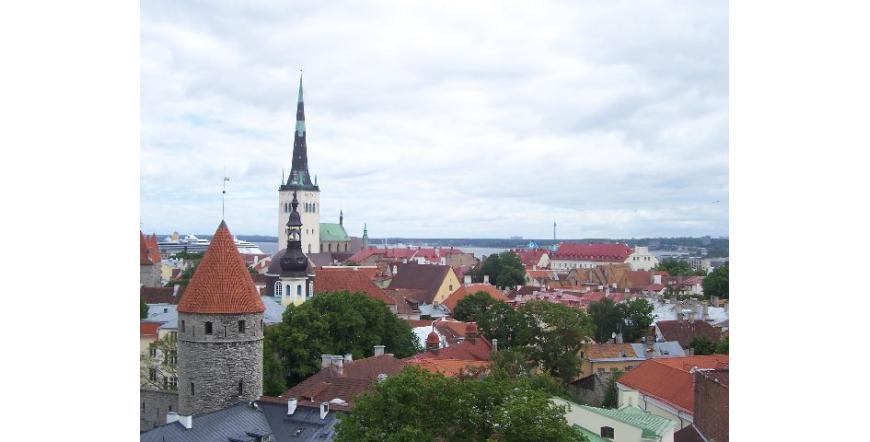
Tallinn is the capital and largest city of Estonia, as well as the main administrative center of Harju County. Tallinn is located on the southern shore of the Gulf of Finland, about 80 kilometers (50 mi) from Helsinki. Lake Julemiste is the largest lake in the Tallinn area and provides water for the entire capital. Tallinn has a very strategic location - it is situated between Russia, Europe and Scandinavia, and has therefore been the goal of many nations since its foundation. Tallinn has been ruled by Russians, Swedes and Danes at various times. During the city's industrial revolution in the 19th century, when the city was ruled by the Russians, the city's harbor was expanded. In the 20th century the city became the capital of free Estonia, and after the occupation of Soviet Russia in 1944. Tallinn became the capital of Soviet Estonia. The Summer Olympics were held in Moscow, and a regatta was held in the neighboring town of Pirita, prompting the construction of new and more modern buildings, a process that continued apace after Estonia gained de facto independence from Soviet Russia.
The Estonian capital Tallinn is one of the fastest growing destinations in Europe and has yet to become a tourist attraction. Tallinn is a modern and fast-growing city that has attractions from several different cultures and nationalities. This makes it an interesting and frequently visited destination in this part of the continent. There is no argument that the most impressive in the entire city is the Old Town, which is divided into two parts, from the coming together of which the city of today is formed. These parts are Toompea and the Old Town, settled in the past mainly by Germans and Russians. Today, Old Tallinn was declared a UNESCO World Heritage Site in 1997.
In the Old Town, where besides the usual souvenir shops, one can also find wonderful restaurants and places where chocolate is made by hand and on site. It is also home to Tallinn's main square, surrounded by restaurants serving national cuisine. Again in the old part are the government and parliament of Estonia.
Another landmark in Tallinn is the royal palace, which Peter the Great built a few years after Russia conquered Estonia from Sweden in 1710. Around the palace there is a wonderful huge park, which is now a favorite place not only for locals but also for tourists.
Also of interest are the City Wall and the defensive towers, the magnificent medieval castle on Toompea Hill with the Long German tower, St. Nicholas Church, St. Alexander Nevsky Cathedral, Orlov-Davidov Castle, the Estonian Parliament, and the Niguliste Church.
The Estonian Open Air Museum, west of Tallinn, is open to those wishing to explore old Estonian culture and architecture.
Weather in Tallinn, Estonia

Wind: 2.57 m/s
Humidity: 72 %
Pressure: 1013 hpa
Clouds: 20 %